Showing posts with label Chittagong. Show all posts

Sunday, January 13, 2019

Bangladesh: Land of Pathos, Paradox and Natural Beauty


(All photos by Hasan Z. Rahim)

In my previous post, I had written of a dear cousin, a physician from Connecticut, who I was hoping to meet up with in Bangladesh this winter. He had arrived in the country of our birth in mid-December, two weeks before I was scheduled to arrive from San Jose, California.

But the transience of life and the absurdity of human planning cruelly manifested themselves. Suddenly he became ill and in the ambulance on the way to the hospital, he breathed his last. His body was taken by road from Dhaka, the capital, to Chittagong, the port-city by the Bay of Bengal, about 150 miles south. From there it was taken to our ancestral village 15 miles further south. He was buried in the family graveyard, 8000 miles away from Connecticut to which he had booked his flight to return in the third week of January.

And so it happened that I found myself on the 2nd of January standing by my cousin’s grave, still bearing the evidence freshly dug earth, surrounded by ancient mango trees loud with birds. I prayed for his soul and wept.

*

Modernity has come to Bangladeshi villages. City folks arrive by car to visit relatives, unlike the boats and the steamers we relied on few decades ago. There are shopping centers and banquet halls and the hustle and bustle of the marketplace, more than agriculture, has become the norm. Farmers still carry hay on their head but instead of wearing the traditional lungi, they now wear jeans.


*

I visit Bangladesh every winter to see my mother. She is in her mid-80s and is rapidly sliding downward. She cannot talk. The guttural sound she makes to express herself is indecipherable to me. But it doesn’t matter, for my sister, a leading pediatrician of Bangladesh and our mother’s principal care-giver, understands her perfectly. Mother is literally and metaphorically in the best possible hands. There are round-the-clock nurses and maids but it is my sister’s sublime touch that sustains and nourishes her. I am a side show, but mother is still thrilled to see me and asks if I have been served food to my liking. "You know I can't cook anymore for you," she says with a wan smile. I look away to hide my tears. Then I look at her and see the tireless woman who raised six boisterous, often rowdy and difficult children, while father, a doctor, was mostly busy earning to support the family. Father had passed away almost two decades ago. Mother’s eyes well up when I recall the things father used to say, a funny man, and her shoulder sinks into the wheel chair. “Sit up straight,” mocks my sister. “Stop being mischievous,” she tells her with a twinkle in her eye. We all share in the laughter. Another day followed by another unchanging night. Only time marks the passage of sorrow and a generation with a grace that I can only sense but cannot explain.

*

I take a stroll along the shore by the Bay of Bengal. It is the Patenga beach of my childhood, as timeless as ever, boatmen plying the Karnafuli river and ship slowly moving toward the Bay. A
3-mile long tunnel under the Karnafuli is being built. When it’s completed in about 2 years, Chittagong and the outlying villages will be linked, and commerce will flourish, particularly the garment industry, and the economy will undoubtedly boom. Yet I can feel that something is being lost, that what was once unique is giving way to the commonplace and the mundane, that villages that were once a haven for restless city souls will be no more. The path forward is relentless, trampling beauty and peace in its wake.


*

Inequality is stark in Bangladesh. With a population of about 165 million and a per capita income of $2000, there are 10 billionaires and over 23,000 millionaires, most of whom got wealthy through graft and political shenanigans. There are very few beggars but frustration and repressed anger among the general population are palpable. Who can exploit whom to get ahead seems to occupy the waking (and sometimes the sleeping) hours of many Bangladeshis. But I have also seen a proliferation of philanthropic organizations managed by the locals - young and old – whose only aim in life is to serve the poor and the destitute. My own family operates a hospital in our village in Chittagong where every Friday, my sister operates on about a dozen children afflicted with life-threatening illnesses. On the outskirts of Dhaka, I visited a
self-sustaining and sprawling experimental “Park” that serve the local village population with everything from schools and clinics to groceries and theaters.

*

The natural beauty of Bangladesh is taking a hit from rapid industrialization, particularly from brick fields that continuously spew out harmful chemicals in the air to only partially meet the insatiable demands of the booming construction industry. But if you make the effort, and not worry about time, you can still discover the breathtaking beauty Bangladesh used to be known for.

Before bidding mother and my siblings good-bye, I save a day to do nothing but seek beauty even as it becomes more elusive by the year.


Wednesday, January 17, 2018

Safe Return a Distant Dream for Rohingya Refugees

(You can also read the article in Mercury News.)

What is most jarring at first sight is the juxtaposition of natural beauty and human misery: Waves from the Bay of Bengal lapping at sandy beaches while desperate refugees fleeing genocide next door are packed 1,000 per square mile into unhygienic camps.
I am in Cox’s Bazar in the southern tip of Bangladesh, where more than 655,000 Rohingya Muslims fled to Bangladesh since August of last year after Myanmar’s military and Buddhist mobs carried out a genocide against them. As an American of Bangladeshi origin who grew up in the port city of Chittagong 100 miles north, I was compelled by conscience to see firsthand the current situation and the future of the most persecuted minority on earth.

Visiting one of the most congested settlements, in a place called Ukhiya, the first thing that struck me was that no Rohingya was starving. As Commissioner of Relief Control Mustafizur Rahman explained, the months from August to October were rough because the government and the NGOs were unprepared for the massive exodus. Now food was plentiful and Rohingyas were eating rice, lentils, vegetables, fish and fruit. What has helped was the takeover of camp management by the Bangladesh army from corrupt civilian administration that mismanaged aid while doing nothing to prevent local predators from exploiting the vulnerable Rohingyas.
Health organizations have also found their stride. I saw a physician named Dr. Mohsin treating patients for anemia, high fever, pneumonia and respiratory diseases. He lauded UNICEF for vaccinating children, Bangladesh-based BRAC for providing sanitation, and People’s Health Center for providing pre- and post-natal care for pregnant women. A surgeon named Dr. Tahmina identified Florida-based HOPE Foundation and Doctors without Borders  for providing critical surgery and OB-GYN services.

The problem, I found, was not humanitarian but political. The Rohingyas have stirred the conscience of humanity, but their political status is in limbo. Chemon Begum, a woman in her mid-20s who was violated but escaped death, told me of her dreams of returning to Rakhine, Myanmar, where her ancestors had lived for hundreds of years but doesn’t see it ever happening. China, eyeing the Rakhine State’s reserves of timber and gas, has threatened to veto any Security Council resolution critical of Myanmar. India, which has turned Bangladesh into a captive market for its products and policies, has sided with Myanmar, as has Russia. U.S. Secretary of State Rex Tillerson and some congressional members have labeled the Rohingya crisis as ethnic cleansing, but as Usman Sarwar, a camp administrator, told me, everyone finds it a cruel joke that President Trump will help Muslim refugees from Myanmar while imposing a travel ban on Muslims to America.


Bangladesh and Myanmar have formed a joint commission on repatriation but with no clout at the negotiating table, Bangladesh has meekly accepted terms dictated by Myanmar. Two points make any meaningful repatriation risible: 1) Returning Rohingyas must offer proof of residence, an absurdity since they have lost everything, and 2) Even if some are accepted, they will be confined to concentration-like camps.
The Rohingyas I met, particularly adolescent and pregnant girls, seemed stuck at the threshold between life and death. Thanks to the generosity of members of San Jose’s Evergreen Islamic Center, I was able to distribute some clothes and blankets to the neediest of them. But as heartbreaking as my interaction with them was, my moment of truth came when I distributed some candies to the children. Eleven-year-old Jannat smiled through tears and said, “I have never tasted anything sweet in my life.”
She meant “until now” and she was obviously being literal but unknowingly, in a single spontaneous sentence, she summed up the sorrow and the tragedy of her hapless people.

Friday, September 08, 2017

Stop the Genocide Against Rohingya Muslims


In Mayanmar now, history is repeating itself but with a genocidal twist. Rohingya Muslims, considered the world’s most persecuted minority, have lived for 150 years in Myanmar’s far western Rakhine state. Denied citizenship by the military junta since 1982, they have been stateless and without the most basic human rights, thus prey to indiscriminate rape, torture and killing by Buddhist militants and civilians alike.

In recent days, however, eyewitness accounts of mass rape, killing and ethnic cleansing of Rohingya Muslims has horrified the world. Families, including newborns, have been slaughtered and burned alive. United Nations officials report that tens of thousands of Rohingya women, children and men are streaming into neighboring Bangladesh after trudging through treacherous ravines and jungles, many falling along the way. Babies are dying in the cradles of their mothers.

Bangladesh, a poor country, is reeling under the burden of providing relief to the 100,000 who have fled Mayanmar in the last 2 weeks alone. This is in addition to the already half-a-million Rohingyas in the Cox’s Bazar district and adjoining villages living in squalid, unhygienic camps. (Growing up in Bangladesh, I visited Cox's Bazar and its adjoining villages in my youth for picnics and idyllic strolls along its unbroken shoreline but now it resonates only with the suffering of Rohingya Muslims.)

For perspective, I called a journalist friend reporting from border posts along the
200-mile Bangladesh-Mayanmar border.

Mamun Abdullah manages a 24-hour News Channel called Independent TV. “Rohingya insurgents were forced to take up arms against the violence on their people,” said Mamun. “On August 25 they attacked some Mayanmar police posts. The government responded with disproportionate military force. That’s when the mass exodus began.”


The critical need of the refugees, said Mamun, is food, pure drinking water, sanitation and shelter. “That’s not available. About 50 Rohingyas with multiple bullet and burn injuries are being treated in Chittagong medical college hospital a hundred miles away. It’s like a drop in the ocean. Several have already died.”

Mamun is skeptical about the possibility of Rohingya Muslims returning to Myanmar. “Repatriation is a pipedream. Sheikh Hasina (Bangladesh’s prime minister), has praised Bangladeshis along the border for giving shelter to fleeing Rohingyas but has also said Bangladesh cannot meet the demands of the swelling refugees. It’s true, we just don’t have the facilities or the land.”

“So what’s the way out?”

“There must be international pressure to force Myanmar to stop the genocide. We have not heard anything from United States government. Only the Turkish and Indonesian governments have pledged some help so far.”

It is in the American character to serve the suffering. While it is beyond our power to control the fury of nature, as we saw with Hurricane Harvey and now with Irma, we can unite as decent human beings to do something about the deadly violence being waged against the Rohingya Muslims, and, for that matter, violence anywhere against a minority by a majority, irrespective of race and religion.

Despite the bigotry and divisiveness promoted by president Trump and his cohorts, Americans of all persuasions should contact their elected officials and lawmakers to demand that Aung San Suu Kyi, the Nobel Peace-prize winner and the de facto leader of Myanmar, stop the torture and the killing of Rohingya Muslims. She has not said a word so far, a stance that has been denounced by many governments but unfortunately, not ours. Her silence has only emboldened Myanmar’s militants and security forces in the state-sanctioned genocide of Rohingya Muslims.

We should also call upon our government to demand that the Myanmar government give Rohingya Muslims citizenship in a country where they have lived for centuries, and to accord them the same dignity, safety and security that the Buddhist majority enjoy. A concerted effort must also be made to provide humanitarian aid to the refugees streaming into Bangladesh and to sponsor a resolution in the UN Security Council to immediately stop the genocide of Rohingya Muslims.

Some media links:


Thursday, January 28, 2016

Historic War Cemetery of Chittagong, Bangladesh

Seven hundred and fifty-five soldiers are buried in Chittagong's historic War Cemetery. The 'War' refers to the Second World War and the graves belong to soldiers of the sub-continent, England and Africa who perished while taking Burma back from the Japanese after years of fierce fighting.
The Burma War lasted from 1941-1945. It began when the Japanese seized the Tenessarim airfields in mid-December 1941, causing the closure of the strategic Burma Road to Allied forces. Rangoon fell to the Japanese on March 7, 1942, compelling the Allied forces to withdraw up the Irrawady and Sittang Valleys to Mandalay and then to India.
It's worth noting that only one hundred thousand Japanese soldiers conquered Burma in 1942 from the more numerous British and Indian troops. When they marched on Rangoon, the Japanese walked for 45 minutes and slept for 15, such was their steely discipline. When they slept, they made sure their feet pointed toward Rangoon so they didn’t march in the wrong direction when they woke up!
However, in 1943, new airfields constructed in India allowed the British to regain air supremacy, proving a turning point in the war. Supply to China, whose soldiers were fighting alongside allied forces, was resumed from airfields in Assam. In December, the 15th Corps attacked on the Arakan Front. A Japanese counterattack in February 1944 was decisively defeated.
There was now no stopping the allies who launched an offensive on three fronts. The American-Chinese forces attacked from the north. The Arakan 15th Corps captured the airfields at Akyak and Ramree while the 4th and the 33rd Corps captured Meiktila and Mandalay and pursued the fleeing Japanese army southward to Pegu on 1 May, 1945. Five days later, these two Corps linked up with the 15th Corps that had entered Rangoon on May 3 after an unopposed landing. Japan had lost Burma to the Allied forces and a formal cease-fire in August, 1945 merely cemented the fact.
A staggering number of 45,000 Commonwealth soldiers lost their lives in the Burma War, of whom 27,000 came from what is now Bangladesh, Pakistan and India. They are commemorated in headstones and cremation memorials in nine cemeteries in Bangladesh, Assam and Burma. The 755 soldiers buried in the Chittagong War Cemetery came from the Chittagong General Hospital in Ander Killa (Inner fort) where they succumbed to their injuries sustained in the Burma War.
As you walk along rows and rows of headstones, you read the names of soldiers who made the ultimate sacrifice to defend freedom from fascism decades ago, and you experience a sense of the sacred and the profound.


Muhammad Bahadur of the Indian Pioneer Corps, dead on 13 June, 1945, at age 30.
Muhammad Aziz, a sepoy of the Royal Indian Army Service Corps, on 22nd June, 1944, at 25.
Lance Naik S.M. Dada Bai of Indian Engineers, in June ’45, age 18!

Flying Officer M.T.W Pain, with the Royal Australian Air Force, in August ’44, age 21.
“Loved son of Rev. & Mrs. W. K. Pain, of Wahroonga, N.S. Wales”


Sergeant C.C. Young, Wireless Operator/ Air Gunner with the Royal Air Force, in March ’45, age 21 “He was so young, his heart so brave. In the midst of life God called him away.”

Flying Officer W.R. Thomson, a pilot with the Royal Canadian Air Force, in February ’45, age 21 “In loving memory of our dear Bill”
Pilot Officer E.C. Dowling, Pilot with the Royal Air Force, in August ’43, age 27 “In loving memory of my dear husband Eric. Your wife and son.”

Craftsman Muhammad Ishaq, Indian Electrical and Mechanical Engineers, in October ’45, age 19.
Driver Audu Salamu, West African Army Services Corps, in June ’45.
Sepoy Sadiq Mian, Indian Army Medical Corps, in March ’44, age 24.
Sepoy Roshan Zamir, 12th Frontier Force Regiment, in February ’44, age 17!
Sepoy Gul Rahman, Infantry, in March ’45, age 16!
And on and on …

In one corner of the cemetery lie buried  19 Japanese soldiers in unmarked graves, 18 of whose names are recorded in a plaque, "with one of their comrades whose name is unknown."

At the entrance of the cemetery is a Memorial Register, 1939-1945, containing “the names of 6500 sailors and merchant seamen who died in the service of their motherland and have no graves but the sea.”

Bangladesh's port city of Chittagong is home to 8 million people. It is a tragedy that the War Cemetery, constructed and meticulously maintained by the Commonwealth War Graves Commission, is one of the very few spots that offer Chittagoneans a refuge from the maddening traffic and the impossible gridlocks of a bustling yet utterly unplanned and unkempt city. Students, young lovers and couples of all ages stroll by the bougainvillea hedges or lean against the Champa trees, whispering sweet nothings.


But something else has taken over the visitors that I had not anticipated since I brought my wife here 35 years ago and photographed her in this pristine setting, before migrating to America. The Cemetery seems to have become the Selfie capital of the world! Everywhere you look, girls and boys are busy capturing themselves on their smartphones. I have not seen such selfie-frenzy even at the Golden Gate Bridge in San Francisco, or at the scenic Carmel-by-the-Sea in Northern California.


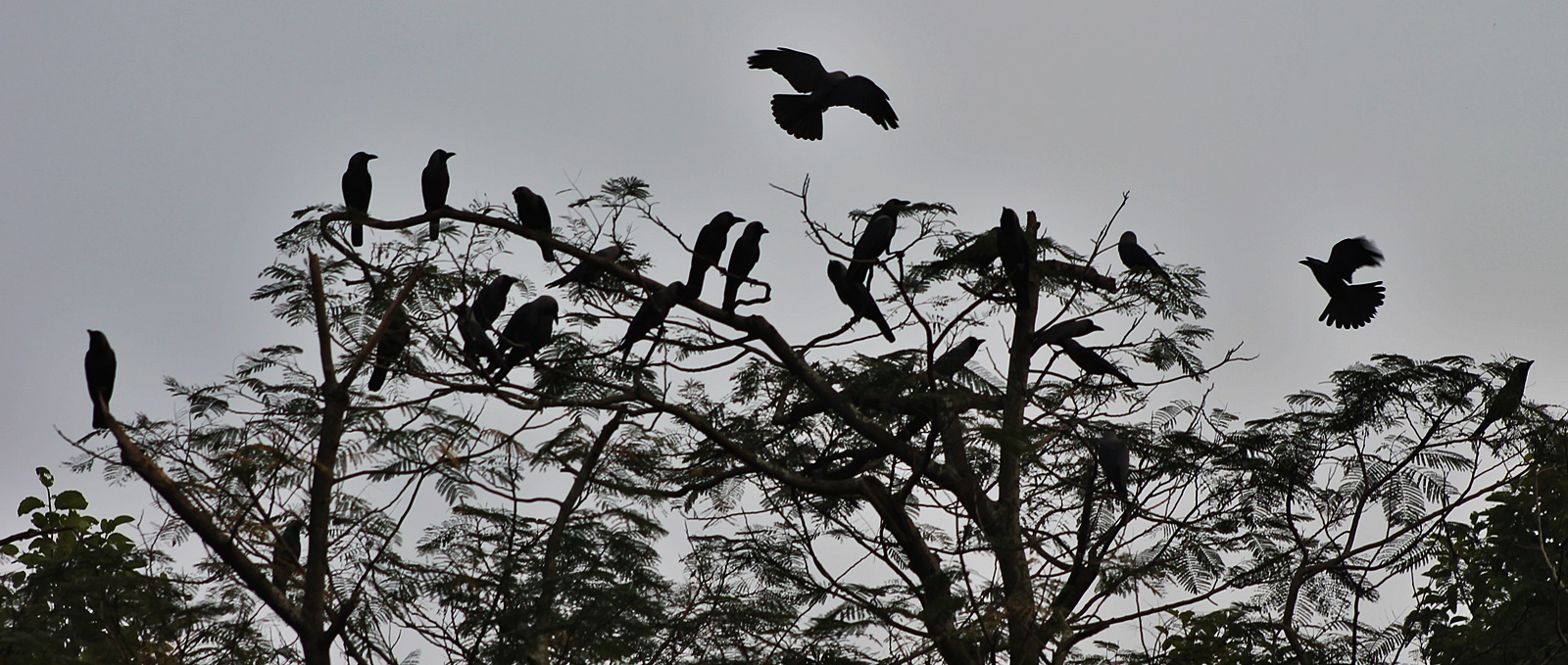
So I busy myself reading the headstones as a mark of respect for the dead. As daylight fades and crows gather on the Krishnachura trees, I look around at the laughing couples and playful kids and realize that those who are commemorated here have not given their lives in vain. In a sense, this laughter, this peace, this sanctuary in a troubled world is their fitting legacy.


Epilogue: Abdul Barek has been a gardener at the cemetery for 37 years and Abul Bashar for 12. They have been tending to the roses, the noyontaras, the lantanas, the gardenias, the lilies, and hundred more varieties year after year. They helped me identify the plants that thrive in the cemetery through their care, even though living on meager wages. I offer them some money. Both refuse. "We are well cared for," says Bashar. "We are happy doing what we do. What can beat that?"

Sunday, July 12, 2009

Web Entrepreneurship in Bangladesh

Spent two weeks in Bangladesh, country of my birth, this summer. Held a seminar on “Web Entrepreneurship in Bangladesh: Lessons from Silicon Valley” on 4th of July. I was surprised by the turnout. Over 100 tech-savvy executives,managers, entrepreneurs and media representatives gathered in an auditorium in Dhaka on a Saturday to listen to what I had to say. (See coverage) More than Web technology, they were intrigued by the soft skills I listed as being critical to success in any Web venture.

After my hour-and-a-half presentation, animated discussions ensued. What impressed me most was how eager and excited my listeners were in starting their own Web businesses. Right at the beginning I was able to capture their attention by declaring that anyone with an intelligent cell phone could become a Web entrepreneur. 92% of Bangladesh is covered by mobile networks. You see advertisements for Grameen, Cell City and other mobile networks everywhere. With the head-start Bangladeshis have with mobile phones, eCommerce should see explosive growth. I am convinced of it.

What I am planning to offer as a starter is hands-on training on Web 2.0 technologies. An obstacle is difficulty with the English language. When I told the attendees that my training will help them improve their command of English as well, the response was heart-felt.

Rousing seminars are dime a dozen. “Ideas are easier to hatch than execute” was a point I made in one of my slides. Yearly week-long seminars by Non-Resident Bangladeshis (NRBs) in Dhaka have become a common occurrence, yet hardly anything has changed. What's needed is action. I am currently preparing a comprehensive hands-on Web 2.0 training manual and hope to travel to Dhaka and Chittagong in a few months to launch my Training of Trainers (TOT) program.
Bangladeshis are hungry for knowledge. If I can be a catalyst for at least some for them to harness the power of the Web to better their lot and help the country’s economy, it will be an exceptionally satisfying experience. Full steam ahead!

Saturday, May 10, 2008

The Junta in Burma Must Fall

I was a student at Dhaka University in the-then East Pakistan when one of the deadliest storms in history struck the province’s coastal regions on the night of November 12, 1970. The Bhola cyclone took an estimated 500,000 lives. Even now, almost four decades later, I get nightmares remembering the bloated bodies of children floating on low-lying islands and rivers.

The military government in power in West Pakistan, led by General Yahya Khan, responded to the disaster with … silence. When the world erupted with outrage, the General ordered his minions to mount a relief operation pathetically inadequate to the devastation wrought by the cyclone.

Economic and political oppression of the eastern wing by the western wing had become the modus operandi within months of Pakistan’s independence in 1947 from India. For almost a quarter century, anger had been rising among the Bengali-speaking people of East Pakistan at the blatant usurpation of power by the ruling coterie of West Pakistan.

The 1970 cyclone was the last straw. East Pakistanis realized that the status quo could be tolerated no longer. A month later, Sheikh Mujibur Rahman’s Awami League won a landslide victory in the national election. The choice was clear: either allow, as the constitution demanded, the Awami League to form the central government, or get ready for secession.

General Yahya Khan’s brutal crackdown on unarmed civilians of East Pakistan is among the worst genocides of the 20th century. Over a million people were killed in nine months but that could not stop the inevitable. East Pakistan became the independent nation of Bangladesh in December of 1971.

While several factors contributed to the birth of Bangladesh, the Bhola cyclone was undoubtedly a catalyst of sorts. Even to those diehard loyalists who wanted the country to remain intact, the brutal indifference of the central government was impossible to ignore.

Fast forward 38 years. A deadly cyclone struck Burma (Myanmar) on May 2, 2008. Cyclone Nargis has already claimed over 60,000 lives and the toll is likely to exceed 100,000. Close to two million people are homeless and at risk of epidemics and starvation. The Irrawady River Delta is a scene of death and destruction that reminded me of what I had seen in 1970 in coastal Bangladesh.


But the similarities do not stop there, for Burma has been in the grips of its military since 1962. The current junta seized power in 1988 and renamed the country Myanmar. It is among the most repressive regimes the world has ever known. The Burmese live in fear and misery. The despised generals, operating in a time warp, crushed an uprising by monks - the Saffron Revolution - in September of last year. Peace activist and Nobel laureate Aung San Suu Kyi has been under house arrest for much of the past 18 years.

The Burmese are among the most enterprising and industrious people on earth. Visitors to Cox’s Bazar in Chittagong, Bangladesh, that shares border with Burma, can see examples of their creativity in the their unique farming methods, in the design and manufacture of pearl jewelries, and in the soaring beauty of their pagodas. The junta is relentlessly crushing the spirits of these peaceful, freedom-loving people . Led by "Supreme Leader" Than Shwe, the generals are preventing humanitarian aid to reach grief-stricken Burmese. They added insult to injury by engaging in a sham referendum in the midst of sputtering relief efforts to perpetuate their tyranny.

The generals must be overthrown. The West, particularly the United States, must provide overt support to Burma’s government in exile without fearing any backlash from China. Even an outright invasion should not be ruled out. In fact, that may very well be the best option. At the very least, the United Nations must put together a genocide tribunal for Shwe and his fellow criminals. Simply waiting for the generals to die or disappear will not work. Conscientious people around the world must convince their respective governments to rid Burma of the junta that has all but ruined this pastoral South Asian country. If cyclone Nargis can be the catalyst for freedom in Burma, perhaps the thousands of lives lost will not have been in vain.