Showing posts with label Dhaka. Show all posts

Sunday, January 13, 2019

Bangladesh: Land of Pathos, Paradox and Natural Beauty


(All photos by Hasan Z. Rahim)

In my previous post, I had written of a dear cousin, a physician from Connecticut, who I was hoping to meet up with in Bangladesh this winter. He had arrived in the country of our birth in mid-December, two weeks before I was scheduled to arrive from San Jose, California.

But the transience of life and the absurdity of human planning cruelly manifested themselves. Suddenly he became ill and in the ambulance on the way to the hospital, he breathed his last. His body was taken by road from Dhaka, the capital, to Chittagong, the port-city by the Bay of Bengal, about 150 miles south. From there it was taken to our ancestral village 15 miles further south. He was buried in the family graveyard, 8000 miles away from Connecticut to which he had booked his flight to return in the third week of January.

And so it happened that I found myself on the 2nd of January standing by my cousin’s grave, still bearing the evidence freshly dug earth, surrounded by ancient mango trees loud with birds. I prayed for his soul and wept.

*

Modernity has come to Bangladeshi villages. City folks arrive by car to visit relatives, unlike the boats and the steamers we relied on few decades ago. There are shopping centers and banquet halls and the hustle and bustle of the marketplace, more than agriculture, has become the norm. Farmers still carry hay on their head but instead of wearing the traditional lungi, they now wear jeans.


*

I visit Bangladesh every winter to see my mother. She is in her mid-80s and is rapidly sliding downward. She cannot talk. The guttural sound she makes to express herself is indecipherable to me. But it doesn’t matter, for my sister, a leading pediatrician of Bangladesh and our mother’s principal care-giver, understands her perfectly. Mother is literally and metaphorically in the best possible hands. There are round-the-clock nurses and maids but it is my sister’s sublime touch that sustains and nourishes her. I am a side show, but mother is still thrilled to see me and asks if I have been served food to my liking. "You know I can't cook anymore for you," she says with a wan smile. I look away to hide my tears. Then I look at her and see the tireless woman who raised six boisterous, often rowdy and difficult children, while father, a doctor, was mostly busy earning to support the family. Father had passed away almost two decades ago. Mother’s eyes well up when I recall the things father used to say, a funny man, and her shoulder sinks into the wheel chair. “Sit up straight,” mocks my sister. “Stop being mischievous,” she tells her with a twinkle in her eye. We all share in the laughter. Another day followed by another unchanging night. Only time marks the passage of sorrow and a generation with a grace that I can only sense but cannot explain.

*

I take a stroll along the shore by the Bay of Bengal. It is the Patenga beach of my childhood, as timeless as ever, boatmen plying the Karnafuli river and ship slowly moving toward the Bay. A
3-mile long tunnel under the Karnafuli is being built. When it’s completed in about 2 years, Chittagong and the outlying villages will be linked, and commerce will flourish, particularly the garment industry, and the economy will undoubtedly boom. Yet I can feel that something is being lost, that what was once unique is giving way to the commonplace and the mundane, that villages that were once a haven for restless city souls will be no more. The path forward is relentless, trampling beauty and peace in its wake.


*

Inequality is stark in Bangladesh. With a population of about 165 million and a per capita income of $2000, there are 10 billionaires and over 23,000 millionaires, most of whom got wealthy through graft and political shenanigans. There are very few beggars but frustration and repressed anger among the general population are palpable. Who can exploit whom to get ahead seems to occupy the waking (and sometimes the sleeping) hours of many Bangladeshis. But I have also seen a proliferation of philanthropic organizations managed by the locals - young and old – whose only aim in life is to serve the poor and the destitute. My own family operates a hospital in our village in Chittagong where every Friday, my sister operates on about a dozen children afflicted with life-threatening illnesses. On the outskirts of Dhaka, I visited a
self-sustaining and sprawling experimental “Park” that serve the local village population with everything from schools and clinics to groceries and theaters.

*

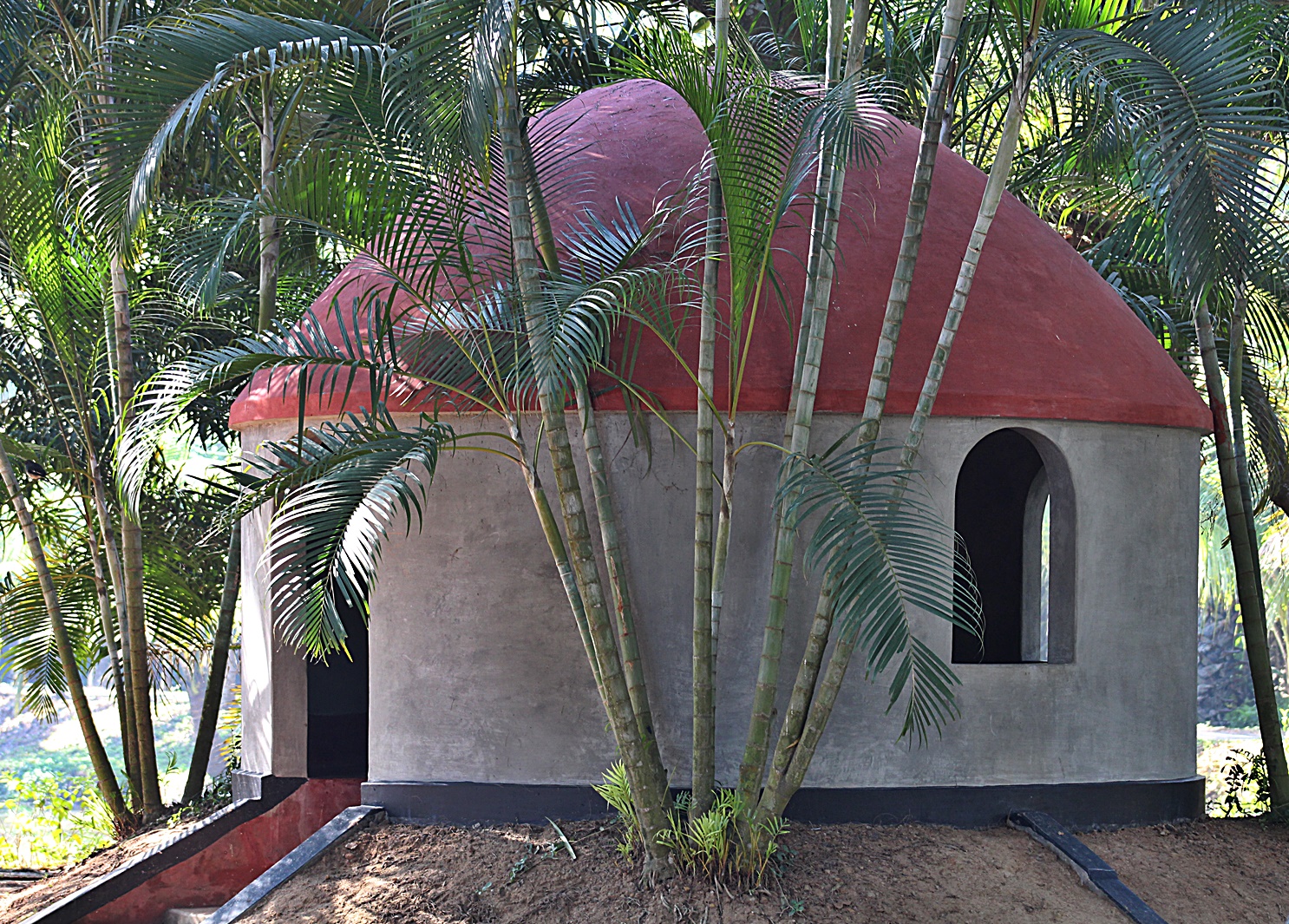
The natural beauty of Bangladesh is taking a hit from rapid industrialization, particularly from brick fields that continuously spew out harmful chemicals in the air to only partially meet the insatiable demands of the booming construction industry. But if you make the effort, and not worry about time, you can still discover the breathtaking beauty Bangladesh used to be known for.

Before bidding mother and my siblings good-bye, I save a day to do nothing but seek beauty even as it becomes more elusive by the year.


Thursday, July 07, 2016

Reversing Bangladesh's Descent into Anarchy

(You can also read the article here and here)

Bangladesh is slowly but surely descending into anarchy.

The time to reverse the descent is now, or it may be too late.

The carnage at an upscale eatery in the diplomatic enclave in the capital city of Dhaka on 1st July, in which twenty hostages, mostly foreigners, were killed with cleavers and long knives, was only a continuation of the butchery of about 40 secular bloggers, university professors, gay rights activists, writers, publishers, foreigners and members of religious minorities, including Shia and Sufi Muslims, Hindus and Christians, since 2013.

The virus of extremism and religious fanaticism is rapidly spreading, infecting a segment of the population that includes estranged and affluent educated young men in their teens and 20's who hate openly and kill wantonly.

ISIS, the death-cult organization, has taken credit for the carnage. Latest reports suggest that the seven young attackers were driven by the nihilistic goals of ISIS, although they probably received military training from homegrown terrorist organizations like Ansar
al-Islam and Jamaat-ul-Mujahideen.

It is a tragedy of gigantic proportion that the Wisconsin-sized nation of 160 million, held up as a symbol of Muslim moderation not too long ago, has become a pawn, perhaps even a player, in the deadly game of global jihadism.

What can Bangladesh do to reverse its descent into the abyss and restore its reputation as a moderate nation?

First, the government must acknowledge that terrorist organizations like ISIS and al-Qaida have planted themselves in Bangladesh, with local fanatics ready to respond to their evil messages with extreme violence. One can fight the enemy only if one identifies who the enemy is. Last month, the government arrested over 11,000 people in a supposed crackdown on terrorism but critics, national and international, complained that many of those arrested were supporters of opposition parties, including the Bangladesh Nationalist Party (BNP) that Prime Minister Hasina is determined to undermine under any pretext.

Second, the conditions that foster the growth of jihadist movements must be eradicated with as much fervor and foresight as the jihadist movements themselves. For Bangladesh, this means giving up its obsession with the past and focusing more on the future.

ISIS-inspired killers in Bangladesh did not grow in a vacuum. A major factor in their rise has been the government’s relentless pursuit of Bangladeshis responsible for war-crimes committed during the nation’s bloody war of independence in 1971. While most Bangladeshis supported the idea of their trial, what was not acceptable was the utter lack of transparency of the so-called “International Crimes Tribunal” established in 2010. There was nothing ‘international’ about the tribunal. Filled with party hacks, it resembled a kangaroo court more than it did any genuine dispenser of justice. The tribunal hanged several members of the fundamentalist Jamaat-e-Islami party, including its leader Motiur Rahman Nizami in May this year. This helped radicalize some Bangladeshis who were convinced that Islam itself was under siege by Sheikh Hasina’s government, despite the fact that the prime minister is a devout Muslim herself.

A corollary of this unfortunate development is the opportunity it has given ISIS looking for soft targets around the world after losing territories in Syria and Iraq. It is clear that it has found one in Bangladesh where general lawlessness, corruption, nepotism, violence and partisan politics have combined to make it a prime target for terrorist organizations.

As an American of Bangladeshi origin, I have been visiting the country of my birth every year for the last several years. The reason for my visit is to be with my octogenarian mother battling several physical ailments. Prophet Muhammad taught that paradise lies beneath the feet of mothers. That, combined with respect and gratitude for the woman who instilled in me the importance of having a purposeful life, used to fill me with happiness every time I boarded the flight from San Francisco on my way to Dhaka.

In the last couple of years, however, my attitude has changed. For one thing, it just isn’t safe there anymore. Anything can happen. Family and friends warn me not to venture outside after dark. News of kidnapping, killing, mugging, bombing and assorted violence fill the daily media. For another, the disintegration of the civil society is too jarring to accept. The opening line of the national anthem of Bangladesh reads: “My Golden Bengal, I love you.” For the common man, that Golden Bengal of yesteryear has degenerated into a cruel and callous country where trust, security and honesty seem quaint relics.

The day after the attack in Dhaka, Prime Minister Sheikh Hasina gave a speech in which she said: “We will turn Bangladesh into a peaceful state by eliminating the terrorists from their roots. No conspiracy can hinder our advancement.”


For the sake of Bangladesh, and the world, we can only hope that the Prime Minister will take rational, practical steps to keep her promise, instead of resorting to policies mired in the past and driven by the idea of revenge.

Thursday, January 30, 2014

The Enduring Mystery of Bird Migration

The lakes of Jahangirnagar University in Bangladesh, about 20 miles from the capital city of Dhaka, are a haven for migratory birds during winter. Over 60 species of birds arrive from the cold Himalayan regions, and from even as far away as Siberia, to spend the winter in the temperate, food-rich lakes, canals and wetlands of Bangladesh, before flying off to Sri Lanka, Indonesia and China. They include several species of ducks, lesser and greater whistling teals, cotton geese, pochards, darters, pintail ducks and herons.


In recent years, however, the number and species of birds migrating to Bangladesh has sharply declined. Ornithologists blame global warming for the decline. The snowy Himalayan regions are not as inhospitably cold as before. Even Siberia is experiencing milder and shorter winters. Add to that local over-fishing, poaching and pesticide-laden runoffs, and it is clear why the lakes of Jahangirnagar University are not as alive with the chirping and the whoosh of the ‘guest birds’ as it was only a few years ago.


Still, the sight of migratory birds, fewer though they may be, is stunning. One minute they are resting gracefully on sandbars, surrounded by bright water lilies, and suddenly, inexplicably, they take to the wings, flying in a synchronized, parabolic arc until they spiral onto the sandbars, each bird returning (so it would seem) to the same spot. Striking in their dimpled reflections, the ducks and their cousins look purposefully to the right or left, waiting perhaps for that mysterious signal, flowing in from somewhere, to lift off into the misty, morning air again.

Across the lake, amid marsh grass, walk the great blue herons, looking for prey, as if also in prayer, patience personified.
Bird migration is one of the enduring mysteries of nature. We may keep adding to our knowledge of how birds steer themselves by starlight and how their internal magnets interact with the earth’s magnetic field but after their long-distance flights are exactly mapped and the science of migration is understood to the last detail, the intangible wonder of it will continue to fascinate us for as long as we share this planet with our avian friends. 

Monday, July 20, 2009

Rekindling the Romance of Space Travel

Forty years ago today, as a student at Dhaka University in Bangladesh (then Pakistan), I remember staying up all night with friends in our hostel, glued to the radio for news of the moon-walking voyagers. Neil Armstrong and Edwin Aldrin had fired our collective imagination as they took tentative steps on the moon while Michael Collins kept vigil in the orbit above. That first small step had opened the door to infinite possibilities. We were exhilarated, our sense of wonder kindled as it has rarely been since.

The daring Apollo 11 astronauts, soaring on the ingenuity of thousands of engineers, made us see the earth as she was: a fragile, small, lonely planet in the vastness of space, in need of the nurturing care of every one of its inhabitants. For a brief, shining moment, we even thought that’s how it was going to be.

On Monday, October 27, 1969, we thronged main street in front of Hotel Intercontinental (now Sheraton) in Dhaka for a glimpse of our heroes. The Apollo 11 astronauts were visiting the city as part of their world-wide goodwill tour. And suddenly there they were, riding in a motorcade, all eyes focused on … Neil Armstrong. Being the first certainly had its privileges, even if the toast of the world had missed an “a” in his unforgettable sentence.

There is talk now of reviving that ’69 spirit of adventure by shooting for Mars, a more hospitable target than the moon. But even if the money is there, is there the national will? “Man must understand his universe,” said Neil Armstrong, “in order to understand his destiny.” The question for us to resolve now as a nations is: What must be our destiny?

Sunday, July 12, 2009

Web Entrepreneurship in Bangladesh

Spent two weeks in Bangladesh, country of my birth, this summer. Held a seminar on “Web Entrepreneurship in Bangladesh: Lessons from Silicon Valley” on 4th of July. I was surprised by the turnout. Over 100 tech-savvy executives,managers, entrepreneurs and media representatives gathered in an auditorium in Dhaka on a Saturday to listen to what I had to say. (See coverage) More than Web technology, they were intrigued by the soft skills I listed as being critical to success in any Web venture.

After my hour-and-a-half presentation, animated discussions ensued. What impressed me most was how eager and excited my listeners were in starting their own Web businesses. Right at the beginning I was able to capture their attention by declaring that anyone with an intelligent cell phone could become a Web entrepreneur. 92% of Bangladesh is covered by mobile networks. You see advertisements for Grameen, Cell City and other mobile networks everywhere. With the head-start Bangladeshis have with mobile phones, eCommerce should see explosive growth. I am convinced of it.

What I am planning to offer as a starter is hands-on training on Web 2.0 technologies. An obstacle is difficulty with the English language. When I told the attendees that my training will help them improve their command of English as well, the response was heart-felt.

Rousing seminars are dime a dozen. “Ideas are easier to hatch than execute” was a point I made in one of my slides. Yearly week-long seminars by Non-Resident Bangladeshis (NRBs) in Dhaka have become a common occurrence, yet hardly anything has changed. What's needed is action. I am currently preparing a comprehensive hands-on Web 2.0 training manual and hope to travel to Dhaka and Chittagong in a few months to launch my Training of Trainers (TOT) program.
Bangladeshis are hungry for knowledge. If I can be a catalyst for at least some for them to harness the power of the Web to better their lot and help the country’s economy, it will be an exceptionally satisfying experience. Full steam ahead!